It Starts With a Text
A child needs shoes.
A school counselor sends a text.
And sometimes, before the final bell rings, that child has a pair that fits.
That's how FOUND works.
It's a remarkably simple process, but there's a whole lot of intention behind it.
And I thought it might be interesting to show you what happens behind the scenes.
Here's what happens next.
When a school employee identifies a need, they simply send us a text.
That's it.
No complicated application. No lengthy approval process. No paperwork for a family to complete.
Just a text from someone who works directly with kids on our local public school campuses.
And then we get to work.
We add the request to a shared list where our volunteer-of-the-day can see exactly what's needed.
They check our warehouse inventory, gather the requested items and coordinate getting them to the school.
Sometimes that means our volunteer makes the delivery. Other times, we coordinate with another volunteer who's available.
We also communicate directly with the person who made the request to determine whether delivery is the best option or whether they'd prefer to come shop with us.
We offer three shopping opportunities each week exclusively for school personnel, allowing them to select resources for the specific students they serve.
And here's the part I think surprises people.
When we receive a request before noon, we can typically get those resources to the school before the end of that same school day.
Requests received after noon are generally fulfilled by the end of the next school day.
That's the goal.
But where does all this stuff come from?
This is where our community comes in.
We have three donation buildings across town where our FUELERS and other generous neighbors can bring clothing, shoes, hygiene products, school supplies and snacks.
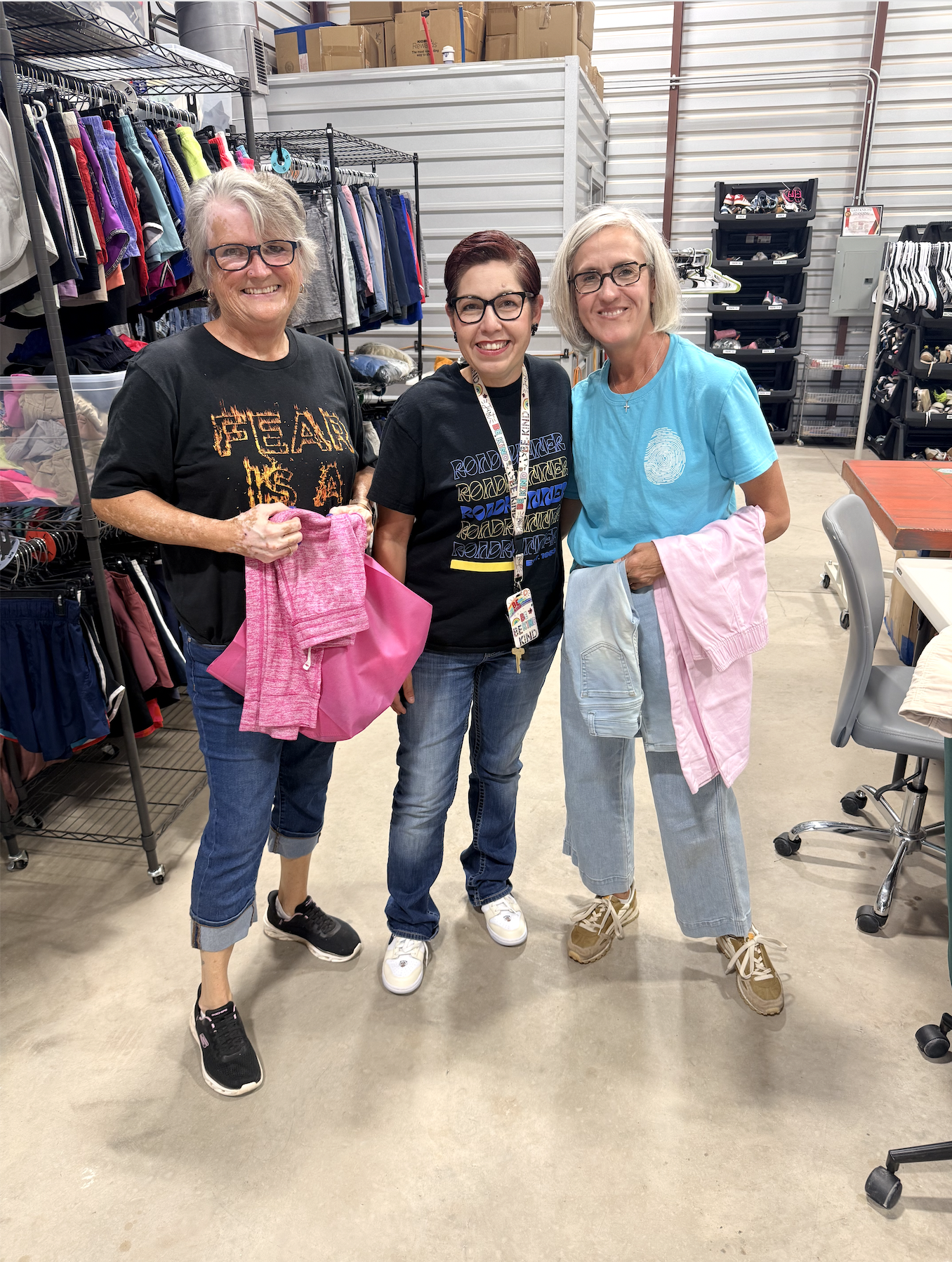
Our volunteers collect those donations, sort through them and stock our warehouse.
And I mean STOCK it.
Everything has a place. Everything is organized so our volunteers and school contacts can find what they're looking for without spending an hour digging through piles of stuff.
When groups come in to serve, one of the things we consistently hear is how surprised they are by how organized everything is.
I love hearing that.
Because while there's certainly a lot of heart behind what we do, there's also a tremendous amount of intention behind how we do it.
The organization is what makes the speed possible.
We don't have time to hunt through mountains of donated clothing when a student needs a pair of jeans today.
And neither do the people working in our schools.
Their time is valuable. Their jobs are demanding. Many of them are responsible for helping dozens of children navigate circumstances that most of us can hardly imagine.
The last thing I want to do is make helping those kids more complicated.
So we've worked to make it remarkably simple.
What happens when we don't have what they need?
We ask our community.
Every Wednesday, we send a text to our FUELERS with a list of specific items we need through something we call Wishlist Wednesday.
These aren't things we think kids might need someday.
They're actual requests coming from school employees who are working directly with children in our community.
Sometimes it's a very specific shoe size.
Sometimes it's underwear, deodorant, school uniforms or snacks.
And sometimes it's something as simple as a few cups of ramen noodles.
I love this part of our model because it takes the guesswork out of giving.
Instead of hoping someone donates what we need, we tell the community exactly what we're missing.
And people respond.
Our volunteers are a pretty remarkable part of this process.
They show up consistently, know how our warehouse operates and pay attention to the specific needs we're trying to meet.
When a FUELER donates something we've requested through Wishlist Wednesday, our volunteers know to be looking for those items.
They're not just sorting donations and stocking shelves. They're helping us connect resources with needs that have already been identified.
Those resources make their way into our donation buildings, through the hands of our volunteers, onto the warehouse shelves and ultimately to the schools where they're needed.
And because our volunteers are so familiar with the process, we can move quickly.
It's a pretty beautiful thing when you think about it.
And sometimes we get to hear what happens on the other end.
A counselor sends a message letting us know how much a student appreciated something. A school nurse shares a story about a child who finally has what they need.
Just last week, we received a handwritten note from a little girl who needed food.
Her school contact reached out to let us know she had been able to give her some noodles and that she also had one of our weekend food bags ready for her.
Those messages mean the world to us.
Because while our process involves inventory, organization, communication and delivery schedules, none of those things are the point.
The child is the point.
And every once in a while, we get a little glimpse of what all that behind-the-scenes work means to one.
Simple doesn't mean accidental.
I think sometimes people assume nonprofit work is mostly about having a big heart and finding enough people who want to help.
And certainly, neither of those things hurts.
But compassion without a practical way to act on it can only go so far.
When I started FOUND, I wanted to build something that made it easy for people to share what they have and easy for school employees to get what their students need.
Not another program with complicated requirements.
Not another place where a family has to tell their story over and over again to qualify for help.
Just a direct connection between the people who know the needs and the community that has the resources to meet them.
Today, we're connected with approximately 175 people working on school campuses across our region.
They're the ones who know the children.
They're the ones who recognize the needs.
And they're the ones who trust us to respond when they reach out.
That's a responsibility I take seriously.
Every shelf we organize, every volunteer we coordinate, every donation we sort and every delivery we make is part of keeping that trust.
And I think it's important for the people who support FOUND to understand that their generosity does more than fill a warehouse.
It fuels a system that makes it possible for us to respond when a child needs something.
The warehouse matters.
The volunteers matter.
The donation buildings matter.
The communication matters.
All of it matters.
Because when those things work together, the gap between recognizing a need and meeting it can be remarkably small.
Sometimes just a few hours.
I've always believed we have an incredibly generous community.
The challenge was never convincing people to care.
It was figuring out how to make that generosity move quickly and purposefully to the places it was needed most.
That's what we've built.
A remarkably simple process to meet some remarkably important needs.
And it all starts with a text.